Passivhaus

Passivhaus uses 75% less energy for space heating than current new builds in the UK.

“The heat losses of the building are reduced so much that it hardly needs any heating at all. Passive heat sources like the sun, human occupants, household appliances and the heat from the extract air cover a large part of the heating demand. The remaining heat can be provided by the supply air if the maximum heating load is less than 10W per square metre of living space. If such supply-air heating suffices as the only heat source, we call the building a Passive House.”

Sounds fantastic and something we really should be aiming for!

There are Passivhaus standard properties being built in the UK – one in Totnes Devon was recently given it’s certificate!

Carbon neutral housing by 2016

All new build housing from 2016 will have to be Carbon Neutral. This will probably mean that most won’t have gas or oil central heating systems installed. It should mean they’re very well insulated though and will be very cheap to heat.

It’s actually from the last Labour government who in December 2006, implemented the idea of these changes.

The government has set up the Zero Carbon Hub

Whilst I can see the importance of cutting back on use of oil and gas (read about Peak Oil to find out more about why), I’m not sure why phrases like fuel poverty get used when talking about new builds. People who can afford a new build house generally have plenty of money – and if they don’t, perhaps that’s because they’ve just bought an incredibly expensive new house.

Builders who fail to meet the standard will be fined £15000. I’m not sure if this is per home, or per housing unit though.

So what is a zero carbon house?
For a new home to be genuinely zero carbon it will need to deliver zero carbon (net over the year) for all energy use in the home – cooking, washing and electronic entertainment appliances as well as space heating, cooling, ventilation, lighting and hot water.

Back in 2006 it was announced in the pre-Budget report that there’d a relief from stamp duty land tax (SDLT) for most new zero carbon homes built in the UK. However to date very few homes have qualified for this relief.

There’s a wiki page about the Code for Sustainable housing if you want to read more.

For me it’s very interesting to see how new builds get built in the year 2016 and whether they can actually be carbon neutral over a year.
Perhaps it will spur on new designs of housing to maximise use of insulation and renewable energy sources.

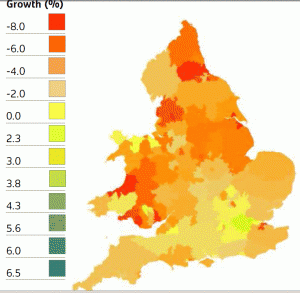
Land Registry Data out today

Land Reg -0.3% Mom / -2.6% YoyPDF file of Land registry info out today – right click file save as pdf
Avergae house price £162,109
Monthly change -0.3%
Annual Change -2.6%

— The metropolitan district with the most significant annual price increase
is Manchester, rising by 1.9 per cent.

— Knowsley saw the highest monthly price rise, with an increase of 2.4
per cent.

— Oldham experienced the most significant annual price fall with a movement
of -11.0 per cent.

— The metropolitan district with the greatest monthly price fall of -1.5
per cent during September was Gateshead.

Stats for Greater Manchester
Monthly change – Annual Change – Average price
Bolton -1.1 -4.4 95041
Bury -0.9 08.2 107465
Manchester 2.0 1.9 96679
Oldham -0.2 -11 81968
Rochdale 1.1 -8.4 94462
Stockport -0.2 -2.1 145479
Tameside 0.5 -6.1 97533
Wigan 0.1 -7.3 93752

Photos to sell a house… the front door ajar

You’ll have seen photos of the front door of houses open on photos on rightmove.
It seems to be a classic shot for classic houses.
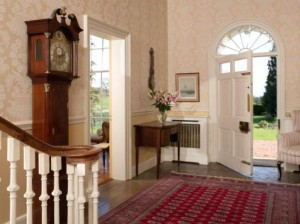
Front door openCannon Court Farm, Cannon Court Road, Maidenhead, Berkshire has a front door ajar photo. It does seem to be a photo that is only used on expensive houses though. I’ve yet to see one on a run of the mill terrace property.

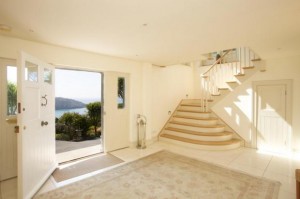
Door openThis amazing house in Salcombe has a fantastic view from the front door so you can see why the estate agent has used a photo of this front door open.
Do we like photos from inside looking out through the front door? Yes, in most cases they show some important architectural feature such as original doors, but often they just show us how nice it’d be to live in a house like that.

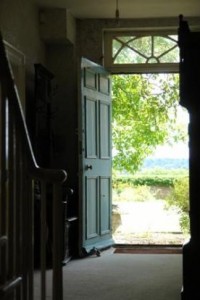
Open doorThis house in Yorkshire has the door open too. It’s the The Old Rectory, Rectory Corner, Brandsby, North Yorkshire. It’s a 7 bedroom lovely looking house too. Got lots of the things I’m looking for too – Principal bedroom with bathroom en suite, guest bedroom suite, bedroom 3 with shower room, 4 further bedrooms, shower room, separate w.c, 2 bedroom cottage/annexe. It also has a Detached cottage with private rear garden.

Stable courtyard with loose boxes, stables, garaging for 3 cars, general purpose building with workshop.
Coach house with swimming pool, gymnasium and leisure suite.
Walled and lawned gardens with ha-ha, conservatory and tennis court. Woodland, pasture, stream-fed lake.

Home insulation

insulationHome insulation is well worth getting! There are various grants and offers for discounted Home insulation at the moment. Look on your local council’s website.

For the Greater Manchester area there’s a website called Get Me Toasty that gives you information about insulation available

If you want to buy some insulation then B&Q have lots of types to chose from.
It’s well worth adding insulation to your loft space if you’ve not got the full recommended depth of 270mm. You should also ensure your loft trap door is insulated and use clips to make a tight seal.

Housing benefit

It’s not called Housing benefit anymore. it’s called Local housing allowance.

It’s now calculated on how many rooms you’re entitled to. This varies with the number of people in your household, and your age.

You can calculate this yourself if you know:
The numbers of how many people live in your household, including family members, non-dependants, boarders and sub-tenants
to know whether you are entitled to an additional bedroom for someone not living with you, but who provides necessary overnight care for you or your partner
the postcode of the property you rent or want to rent, or the local authority where it’s situated

You should know all these things – they’re not hard. If you’re looking to move to an area use the local authority option. If there’s more than one that it might come under it’ll show you both.

If you’re a couple or single then you don’t need to use the bedroom calculator as for couples and single people claiming under certain circumstances the number of bedrooms you are entitled to is fixed.

Calculate the number of bedrooms you’re entitled to claim houseing benefit (LHA) for
The calculator for housing benefit lets you say what authority or postcode and then they tell you how much help you could have with your rent. For a couple with one child in Oldham it works out two bedrooms and the rate for that is £109.62 per week. To work out how much a month you X52 and divide by 12. This works out at £475.02 a month. It’s useful to work this out yourself as most rentals are advertised on a per month rent basis.

If you want to see all the rent rates for different size propertys in different areas then you can visit this page that allows you to investigate all the local housing allowance rates for different bedroom numbers.
It shows by month so you can research older levels and see if it’s gone down.

The aim of changing the housing benefit rules was to try and bring rents down.

For my local authority for October 2011 the rates are:
Shared Accommodation Rate:
£60.00 per week
One Bedroom Rate:
£92.31 per week
Two Bedrooms Rate:
£109.62 per week
Three Bedrooms Rate:
£126.92 per week
Four Bedrooms Rate:
£173.08 per week

Radical solutions of the housing crisis

BBC is running a sensational piece of writing listing the ways that changes to the housing market could help.
Eight radical solutions to the housing crisis

Encourage elderly out of big houses.
Freestyle planning
Contain population growth
Force landlords to sell or let empty properties
Ban second homes
Guarantee mortgage payments
Live with extended family
Build more council homes

Are any of these really radical? The idea of containing population growth is an interesting one as the world approaches 7 billion. Does this include banning further immigration? What sort of restrictions could you fairly impose on the existing UK population without also stopping additional people coming in to the UK?
Some people already live with extended families. Intergeneratonal living does happen in the UK. Perhaps all the younger relatives of the lonely old people could move in to the big houses they’re accused of having. What is too big? Is a three bedroom house too big for one person? And how could you encourage people to move from their too big homes? Many old people hang on to their houses as they want to preserve the memories they had of living there, the family drama and events thats shape us are steeped into the homes we live in.

The two most sensible and easily achievable ideas are to force empty homes to be used and to build more homes. But genuinely affordable ones where rents are at a level that working and supporting a family without needing government support would be good.

Keys to your new house

You’ve got the keys to your new house so what should you do?

Read the meters (You should do this at the place you’re leaving too!) – use a digital camera to get a photo of the meter readings in case of any dispute)

Change the locks. Most people don’t bother but you should really put new barrels in. It’s not complicated and can give you complete peace of mind. There’s millions of keys that get lent to people (Family, cat sitters, even workmen! that don’t get returned.. so avoid any potential problems by just changing the locks)

Get low energy lightbulbs for every room. Buy a bag full in advance. The sellers might leave all their lightbulbs or they might take them all. It’s better to have a few spare bulbs than be in the dark.

Fit a carbon monoxide detector too. They’re about £14 from Amazon and could save your life!

Check the smoke alarms.
Your local fire brigade will come and fit you shiny new ones for free – find their number online or in the yellow pages – Do not ring the 999 number for them!

Change to French CGT rules on second homes

“You must have owned the house for at least five years and you can’t have owned a ‘principal residence’ for at least two years.
French Parliament has just passed an important amendment that says that the sale of second homes will be exempt from CGT when the seller does not own a principal residence. Article on fly2let