Flooding risk and information

Signs a property floods

When a house is near a stream or river you might instantly be suspicious about whether it floods. If you’re serious about buying it then check out the Environment Agency website for flooding risk. If you’re not sure if it has flooded then you can ask the owners. They should tell you the truth, but asking via your solicitor in writing means they’re less likely to try and lie about it.

Why worry about a property having been flooded? If it’s going to happen again then it’s a really horrid experience to have to go through, and your insurance would already be high if it’s flooded once.

You can probably get an insurance quote and find out how much the insurance will be – you would have to say you weren’t sure if a property had flooded – but they should have access to records and a high premium might indicate more risk.

Flooding might only have happened in exceptional circumstances and never happen again especially if flood defences have been improved.

Properties that regularly flood will be by smaller streams less likely to have funding spent on them to prevent reoccurrences of flooding. You might notice that sleeping quarters are downstairs and upstairs is the kitchen and lounge. Fully tiled downstairs would also send a little alarm bell ringing. Plugs placed well above the floor might also indicate work done to prevent damage from flooding.

Look around the area too. Is there a lot of mud on the road? Sometimes flooding just washed mud up onto the roads and doesn’t come up really high. Whilst this might not affect the house it’s still a nuisance for you and something to bear in mind that you might come home to find the road ankle deep in water or worse.

If you want to find out more about flooding in an area then internet search engines are your friend. Type in the name of the area and the word flooding, put them in speed marks such as “Boscastle Flooding” and you’ll get lots of results shown to you that you can read and see photos of. Sometimes you can do street names too and that shows up information about the flooding.

Useful sites for flooding information:
Northern Ireland – Strategic Flood Map (NI) – Rivers & Sea

Environment Agency Flooding site
Top five websites for checking out an area

There’s a huge number of sites you can use for researching an area. It’s at the stage where you don’t even have to visit to have a great idea of what an area is like!
Why don’t you bookmark this page or share with a friend who is looking to buy a house!

1. crime mapPolice Crime Maps.
This is a fantastic new resource that tops our list at the moment. Previously the only way of finding out about what happens on a street would have been to visit it at different times, ask the neighbours, and ask the sellers if there’s any issues with neighbours.

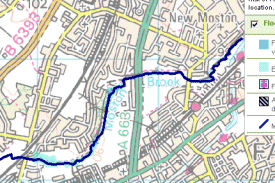
2. Flooding mapRisk of Flooding – insurance is going to get harder to get in areas that flood – so it’s useful to know if you’re at risk. The environment agency allows you to search and see results on a map.
Flooding risk is a concern if you live near a river or stream. If you live in the area you’re searching in you might have an idea of which areas flood, but the make shows you where flood defences have been put in. Always have a look at the area too. Streams that are 100ft below your house aren’t likely to flood without some major catastrophe! However it’s always worth making a note of streams that are close to the property as erosion can steal your garden!

3. house pricesWhat it sold for before – although not every property’s last sale is listed you can get information on what propertys sold for previously. It’s a great site as you can search by postcode, street name, or area. If the property you’re after isn’t listed then look for the neighbouring ones.. specially if they’re really similar in size. Houses not listed on the data publicly are repos, auction sales and some company purchases – this is because they’re below market value. You should be able to buy the information from the land registry site but it’ll cost £4 a go. It’s interesting to know how much similar propertys have sold for for giving you an idea about what price you should go in at.

4. council taxCouncil tax band – worth checking this out before you look at a property – especially if you are concious of the cost of higher bands of council tax. Lots of new builds are rated at C which comes as a shock to many people who move from a similar size band A house. This official site also indicates if a band is due to go up when they sell – ie: if they’ve had work done to make the property bigger than when it sells it might go up a band.

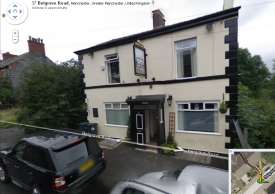
5. streetview imageGoogle Streetview. This is an amazing website for showing you a snapshot of a street when the google car when round. It’s very interesting and covers most of the UK. Private roads haven’t all been done, but the vast majority of the houses in the UK can be seen on it.
Fantastic site to use to see what an area looks like.
You can spend hours going up and down roads with it!
When you get to the maps – type in the postcode, or street name and town. Zoom in a bit to find the right road and then drag the little orange man onto the map and drop him on the roads that show up in blue. Use the mouse to drag around to see 360′, and click on arrows on road to move down the road. You can use the zoom options to zoom in and see more detail.

Sold prices of property

House pricesThere are several sites that you can look up sold property prices on. The land registry doesn’t publish prices of properties that are “sold under market value” so excludes repos and auction properties. It can also exclude properties sold to companies.

I do feel this is slightly dishonest and that all house price data should be available freely. After all something sells for market value at the price it sells for. It is also artificially inflating property prices by excluding lower prices sold at.

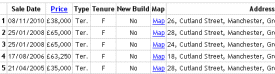
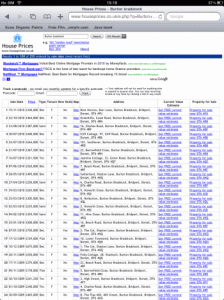
My favourite site to view them on is HousePrices.co.uk – this site allows you to put in a general area, postcode, street name and town to find the house prices.

Of course if a property isn’t listed then it doesn’t mean it hasn’t sold. Some properties just don’t show up. You can view the sale price usually by paying £4 to the land registry to see the title information of the property – but if you want to know a lot of houses that aren’t listed then it could easily get expensive.

It allows you to view in 10, 25, 50 or 100 results at a time. You can follow a street or postcode by asking for an email each time results are updated. This happens at the start of every month usually.
It gives you the sale date, sale price, type (detached or semi or terraced) and whether it’s freehold or leasehold and whether it’s new build or not. It gives the full address of properties too so is useful for looking up postcodes of places too. You can also viuew the current value or the property and see property for sale nearby. These links take you to zoopla.

Official launch of Police Crime maps

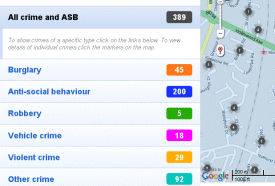
Police crime maps have been officially launched today – 1st February. They have been up and running for a while but it’s official today! They’re really useful. So useful that you’ll wish you’d had access to the data years ago.

Type in the area you’re looking to buy in and you get a street by street breakdown of crime and types of crime. Fantastic for spotting rogue roads that might look all nice and quiet during the day – but will reveal the levels of crime including anti-social behaviour. It only shows the previous months though and we’re not sure they plan to archive data. You might want to learn to do screen grabs of the page or even print it out – especially if you’re trying to achieve a discount on the asking price of a property. Or you might even want to not buy a property when you discover what goes on around there!

It’s an amazing piece of data displaying that will show you the nice sides of towns and the dodgy sides. Someone on the BBC news was worried it might affect house prices! Too right it will! As well as lowering the prices in rough areas, it might however put prices up in quiet areas!

It’s well worth looking at the areas you’re interested in buying a house in! Fantastic stuff!

Property Bee

This tool is amazing. Property Bee is a fantastic add on for your browser that enables you to follow properties on rightmove and see when information has changed.

You need to use firefox browser for it and install it from Property bee’s website. I use this and it’s fantastic fun! If you’re at work you might have to ask permission from your boss.
You need to ensure you’re showing changes in the Styles drop down box and that you’re working in a bee on the options drop down box on the Property Bee Toolbar.

work in a bee
Once you’ve got it set up you can browse various property websites and see the data collected by other people and it’ll keep the changes you spot and add them to the history of the property.

It does have a few failings – when a property is taken off rightmove and put back on it doesn’t keep it’s history. This is a shame but if you store properties in your favourites on rightmove you can see the brief info about the property stored there.

If rightmove changes it’s site layout it ceases to work too until the inventor creates an update. This rarely takes long though. The tool is free to use but feel free to send the maker a donation!

So what do you see?
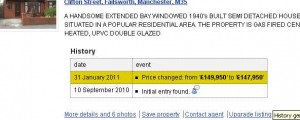
Price reduced property
You’ll see new changes in yellow and the day after they change to blue. They get listed plain after that. This makes it easy to spot changes and see how long the property has been on the market.
It works on rightmove.co.uk, daft.ie, propertynews.com, espc.co.uk, gspc.co.uk, sspc.co.uk and primelocation.com.
It really is a brilliant tool if you’re looking to buy a house!

Time on market – a key indicator for the housing market?

How long it takes to sell a house is one factor that you need to consider when looking at the state of the housing market.

There’s one site that shows this data in an easy to use form. It’s at Home.co.uk – and you can drill down through local information for your area and see lots of useful information. They list the most popular estate agents according to the number of properties they’re marketing, show sold data in nice graphs and of course the Time on Market graphs.

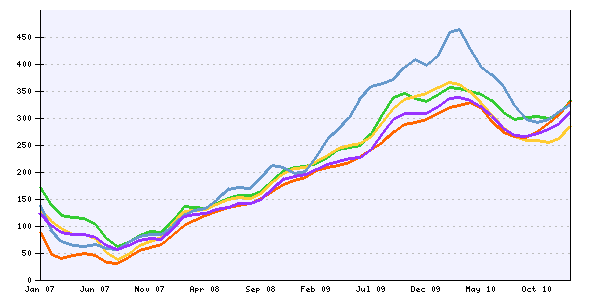
Time on market This graph shows the Average Time On Market By Type in Oldham (days). You can search for your area using the little search box on the left too.

This shows that in January 2007 the average time on market was 125 days for all properties and now it’s 312 days. This might give hope to some people who’ve been trying to sell their house for some time.
The biggest increase has been for terraced properties which took only 88 days back in January 2007 but now sit on the market for 332 days. That’s a huge increase of 277%!

This sort of information is useful to house buyers too although there’s a more useful tool we’ll be telling you about soon called property bee that will really open up your eyes!

London property tool

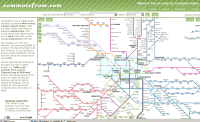
commute fromCommute from is a really odd looking site that helps you wrk out how long your commute across London will be. Probably quite useful but I’ve not tested it against real times to tell for sure!
It’s main feature is that it shows you which stations are within your preferred commute time of the central London tube station you use for work!

Globrix

Alternative website for browsing houses for sale or rent. Different style layout than rightmove.
Visit Globrix to see how it works for you.
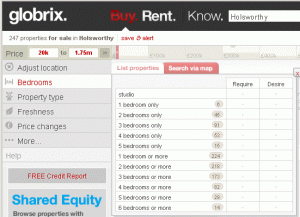
There are drag bars once you’ve put in your search area that control the prices of the properties shown. To start off they’re at the ends of the scale for the given area.
number of bedrooms
You can adjust the number of bedrooms you’re looking for by clicking on the bedrooms option. This is a clever bit of stuff that shows you how many have each number of bedrooms! Helps you decide whether you need to widen your search area.
They also show freshness – how long it’s been on the market. Not as indepth as using other property tools available (such as property bee or property snake) but handy all the same.
The features bit is possible the best bit though as it lets you pick things like swimming pool and bowling alleys, as well as solar panels. Whilst these things might not be on most people’s searches just having the option to use this sort of detailed search makes it head and shoulders above other property search sites. It’s useful if you want an annex, a 3 storey property or some other quirk!

You can also adjust Tenure, Outside space, Condition, Features, Parking, Period, Bathrooms, Estate agents, Nearby stations, Nearby schools, Distance to stations, Distance to schools, Purchase status. It’s quite an interesting array of things you can look out for.

What council tax band is it?

council tax band changeIt might well say in the estate agent details what council tax band the property is in, but how do you check to confirm it?
There’s a site that has the Council Tax Valuation List which shows you. You need to identify the billing authority – which you can do by picking from a drop down list or putting in the postcode of the property.
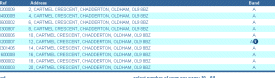
It’ll show the current band and if the band is going to go up! Look for the Band review pending indicator
When a property is improved (e.g. an extension is built), legislation prevents the VOA from increasing the existing band of that property until there is a “relevant transaction”. The relevant transaction can be buying the leasehold or selling the property.
It’s always worth double checking the council tax band of a property before you buy it – just so you can accurately budget your new house!